// THE MOST IMPORTANT POINTS AT A GLANCE
What You'll Take Away from This Article
- Insight: Odoo 18 allows you to value products tracked by serial number or batch individually, rather than only on an aggregated basis.
- Benefits/Functionality: When an item is sold or consumed, its individual cost price is taken into account-making value tracking more accurate and transparent, especially when purchase prices are volatile.
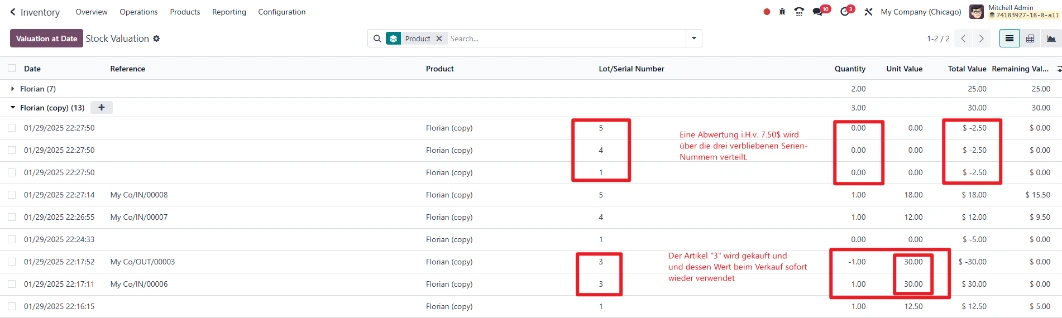
- Limitation/Pitfall: It is currently not possible to selectively devalue individual serial numbers; any reduction in value is distributed evenly across all serial numbers for a given product.
With the release of Odoo 18, the ERP system has undergone a significant enhancement in the area of inventory valuation. While Odoo 16 already introduced automatic “revaluation in case of a discrepancy in the invoice amount,” Odoo is now taking it a step further. Version 18 allows users to customize the valuation of products tracked by serial number or batch.
What does this mean, specifically, for companies?
Greater flexibility, more control, and a more accurate reflection of actual costs. However, there are also challenges that need to be considered. In this article, you’ll learn about the benefits of the new valuation method and what you should keep in mind.
The Inventory Valuation Methods Used in Odoo to Date
Standard Valuation Using FIFO and Average Cost
Until now, companies using Odoo have been able to choose between two inventory valuation methods:
// COMPARISON
FIFO (First-In-First-Out)
The oldest inventory is sold first, so the cost price of these items is used for valuation purposes.
Average Price (Average Costing)
Inventory is valued at an average cost price, regardless of when an item was purchased or at what price.
Both methods have proven effective—but they have their weaknesses, especially when it comes to products with highly volatile purchase prices.
Challenges with High-Value Products
Companies that deal with high-priced or highly volatile products faced a problem:
- A blanket FIFO valuation can be inaccurate if individual lots have very different cost prices.
- The average price can also be problematic when the costs per unit vary widely.
This is where Odoo 18 comes in with its new rating option.
New Valuation Options in Odoo 18
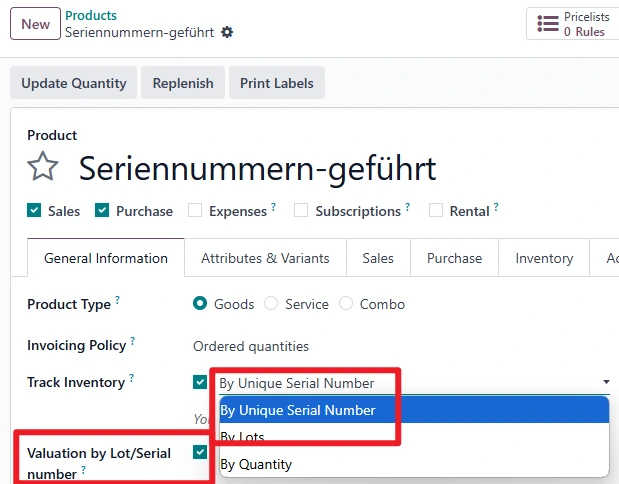
Individual evaluation by serial number or lotThe major new feature in Odoo 18: Companies can now specify for each product whether the valuation should be aggregated or individual.
What this means:
- Products with serial numbers or lot numbers can now be valued individually.
- When a specific item is sold or used, its individual cost price is taken into account.
- Value tracking is becoming more precise and transparent.
Benefits for Companies with Dynamic Purchasing Prices
Companies in the following industries stand to benefit the most:
- Electronics Industry: Hardware components can be subject to significant price fluctuations.
- Medical Technology: Batch-specific evaluation is essential for documentation.
- Luxury goods: Individual items have specific purchase prices that must be recorded accurately.
The new valuation method provides companies with a more realistic picture of their inventory values and, as a result, more accurate financial accounting.
Possible workarounds for targeted devaluations
Possible solutions:
- Working with separate product entries for items that vary widely.
- Manual adjustment of inventory valuation using posting accounts.
- Community solutions and add-ons that allow for specific customizations.
Companies need to come up with creative solutions or hope for future updates.
Conclusion – A Major Step Forward for Inventory Valuation in Odoo
With the new inventory valuation features in Odoo 18, companies finally have the ability to use custom cost prices per serial number or batch. This provides greater transparency and more realistic value tracking—especially for companies with volatile purchase prices or high-priced products.
Nevertheless, there is still room for improvement, particularly when it comes to the targeted devaluation of individual serial numbers. It remains to be seen whether Odoo will include further optimizations in future updates.